Bird news and photos from Leslie Hurteau. All images taken in 2025, unless otherwise noted.
Summer birding on Jeju, and the whole of Korea really, can be particularly unpleasant with high humidity, oppressive heat (getting hotter in recent years), and periods of heavy rainfall. So it’s no surprise that the winter months and migration periods are more popular with birders. However, there’s a lot to be found in the summer that makes Jeju very special, and overall helps Korea standout both in East Asia and globally in the birding world.
Since summer birding on Jeju isn’t as popular as the other seasons, I would like to share some of the summer birding highlights one can expect in Jeju from June to July. Hopefully to make the season more appealing and encourage other birders to get out and find those summer specialties. There is a lot to cover, including many breeding resident species, so I will stick strictly to the summer visitors. This is by no means meant to be comprehensive and only covers what I personally have found through birding on Jeju for four years (and counting). I’m positive there are more surprises waiting.

Among local birders, summer birding on Jeju mainly revolves around Fairy Pittas and Black Paradise Flycatchers. Both species arrive on Jeju around May and stick around until September or so. They are fairly common in similar habitat, mainly thick forests (gotjawal 곶자왈), forested volcanic hills (oreum 오름), and steep rocky valleys on the slopes of Hallasan. Finding them can be difficult and often are heard only, mainly because both species are very shy, and their preferred habitat makes for challenging birding (poor light and many plants!).


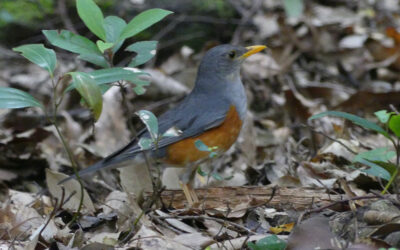
Other species that are easier to find in similar habitats are Grey-backed Thrush and Yellow-rumped Flycatchers, the latter tending to be more common in forests at higher elevations on Hallasan. Both species are easy to see if one is patient enough, and very beautiful.


Some other summer breeders higher up Hallasan and the surrounding thick gotjawal are a bit harder to see, perhaps due to being shyer or simply lower density. Ruddy Kingfishers occasionally breed in the valleys up Hallasan, and I have found Blue-and-white Flycatchers and Asian Brown Flycatchers in similar habitat.


Japanese Night Heron is another species known to breed on Jeju1,2, with the earliest documented record in 20091. They are found in thick gotjawal and oreums with high quality forest that are adjacent to agricultural land. According to the literature, they feed on snails, slugs, and other invertebrates, so it would make sense that they like a mixture of these habitats. Generally they are in the mid mountain region, the large forested and agricultural areas between Hallasan and the coast, but are incredibly difficult to find.

Other summer birds on Jeju would be the well known Barn Swallow, which arrive on Jeju as early as late February and stay until about October. Thankfully they are still a common summer sight on Jeju, unlike most of mainland Korea these days, and easy to see nests on buildings in cities and villages throughout the coast and mid-mountain region.

Some raptor species show up on Jeju in summer, although these summer visitors are much scarcer and harder to find than the resident Peregrines (and Ospreys in recent years). Northern Boobook is probably the most common and can even be heard after sunset in city parks such as Halla Arboretum and Sarabong Park. Oriental Scops Owl is scarcer and seems to prefer less disturbed habitat, so not as easy to encounter unless actively searching for one. Japanese Scops are about the same but are even harder to find in my experience. Chinese Sparrowhawks occasionally breed in the mid-mountain forests surrounding Hallasan, but I’ve only encountered them once in summer. I’ve seen Oriental Honey Buzzards flying around similar areas in summer, suggesting they may breed here as well.


Seabirds of interest in summer are Streaked Shearwaters and Swinhoe’s Storm-petrels. Both breed on offshore islets that are inaccessible to the general public. These two species are very easy to see if one takes a ferry that travels in the sea between Jeju and the mainland. Shearwaters can be seen from land if one has a scope (or binoculars in the right weather conditions), but Swinhoe’s are a lot trickier as they don’t come close enough to land very often.

Aside from the main island of Jeju, the surrounding smaller islands part of the Jeju region are worthwhile visiting in summer for their own reasons.
Mara-do (Mara Island) is one of the easiest and most reliable spots in Korea to see Styan’s Grasshopper Warblers. They arrive on the island starting in early May, and stay until August or so. Certainly one of many reasons why Mara is a top birding destination for Korean birders. Aside from this unique island specialist, Pacific Swifts are easy to see here in summer, with large swarms flying, feeding, and just doing whatever swifts do.


Chuja-do (Chuja Island) is another island of interest. It’s about halfway between Jeju and the mainland, and feels more like one of the many islands off the south coast of the mainland rather than Jeju proper. Any visitor familiar with the two regions would pick up on this immediately simply by seeing the lack of black volcanic rock Jeju is famous for. With that in mind, the birds seem to be a bit more of a mix between mainland and Jeju. For instance during one visit in mid July 2025, I found groups of Tiger Shrikes, with juveniles present, indicating breeding. This species is quite rare on Jeju proper outside of spring and fall migration, so it was an interesting find. Other summer visitors seem to be the ubiquitous Grey Backed Thrush, Pale Thrush (also present in winter), Pacific Swift, and plenty of Barn Swallows. I have also seen East Asian Finless Porpoise here, a marine mammal that is generally not present along the coast of Jeju proper. The island is seemingly rarely birded, much like many of the nearby islands along the southwest and south coast of the mainland, so additional visits may reveal more surprises.


References
- Oh Hongshik, Kim Youngho and Kim Namkyu. 2010. First Breeding Record of Japanese Night Heron Gorsachius goisagi in Korea. Ornithol Sci 9: 131–134 (2010).
- http://koreabizwire.com/endangered-japanese-night-herons-build-nest-on-jeju-island/