
Birds Korea is a small, independent and specialized NGO that is dedicated to the conservation of birds and their habitats in Korea and the wider Yellow Sea Ecoregion.
We conduct targeted research in order to develop plans and designs that can help support the conservation of biodiversity in accordance both with national laws and policies (as outlined in the National Biodiversity Strategy and Action Plan) and the Sustainable Development Goals; and we then use this same research to support evidence-based advocacy and educational work. While all species are important, our limited capacity means that most of our work tends to focus on the conservation of nationally or globally threatened species and of internationally important sites, e.g., as identified by the application of Ramsar criteria.
We have always been open to collaboration with responsible partners; and as such are active in e.g., the newly-established eBird Korea Team; in the East Asian-Australasian Flyway Partnership’s Scaly-sided Merganser Task Force; and in collaborations for the conservation of cranes and additional threatened species in the inner border region of Korea, most especially through the work of Birds Korea’s Imjin-Hantan Region Representative Baek Seung-Kwang and also through our long-standing MOU with the Hanns Seidel Foundation.
In addition to importing and exporting best information on key bird species and habitats, our work in 2025 included:
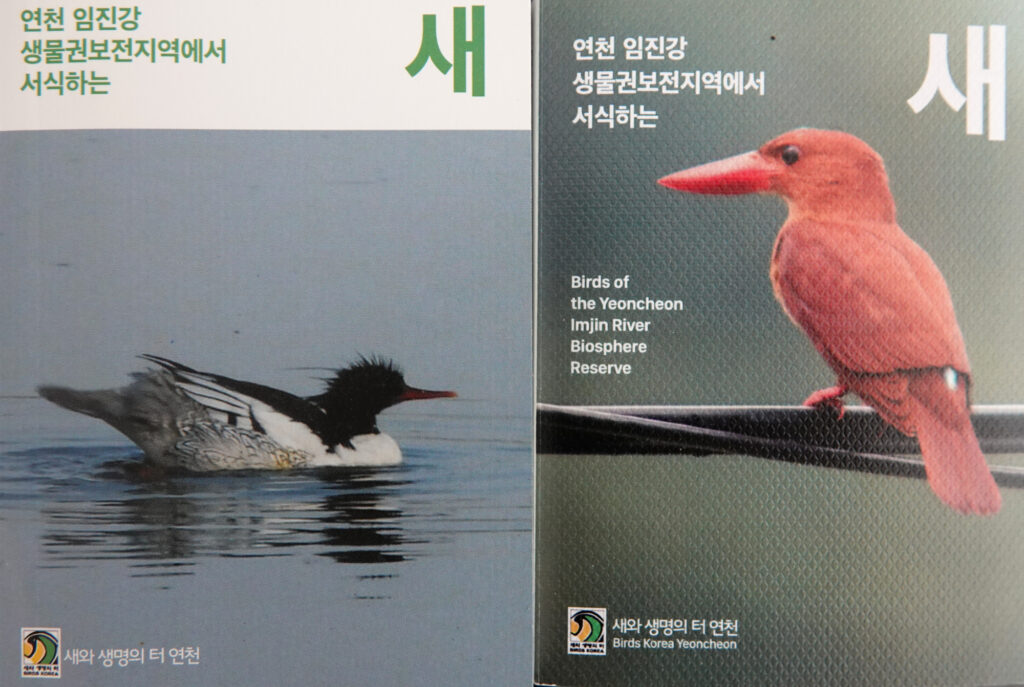
- Throughout the year, continuing our long-term conservation work in the Yeoncheon Imjin River Biosphere Reserve, with financial support from Yeoncheon County, Gyeonggi Province and a small grant from the EAAFP. As part of this, we continued to monitor cranes in the CCZ and Scaly-sided Mergansers within the Yeoncheon Imjin River Flyway Network Site; we gathered more data on Long-billed Plovers; and we surveyed multiple areas, with the aim of improving understanding of the distribution of birds and additional biodiversity. As in previous years, we then used this year’s research to propose restoration concepts and five key recommendations, which have been submitted to Yeoncheon County and Gyeonggi Province. English and Korean editions of our report on this work will be available on request to Birds Korea members. Also funded by Yeoncheon County and Gyeonggi Province, Birds Korea Yeoncheon also conducted several education programs, published a second small photo-guide; and with school students helped in the design of a signboard on Scaly-sided Mergansers which has now been erected in the Biosphere Reserve;
2. In Busan, starting a Society for Ecological Restoration-Microsoft supported collaborative pilot restoration project being developed through our MOU with the Busan Nakdong River Project Management Office. This active collaboration includes experts at the Nakdong Estuary Eco-centre; the company Land Aura; vegetation restoration specialists in a team led by Professor Byun Chaeho; 새덕후 Korean Birder; and various Birds Koreans, including Dr Kim Su-Kyung and Professor Amael Borzee in addition to Dr Nial Moores and National Coordinator Park Meena. This pilot project aims to help restore habitat of Eastern Taiga Bean Geese along the Nakdong River while trying to reduce the bird strike risk to aircraft flying in and out of the airport in Gimhae. The restoration work itself will start in 2026 with a field used for artificial feeding of geese in Maekdo Ecopark.

3. In spring and autumn, continuing research on bird migration hotspot Baengnyeong Island, where 400 species of bird have now been recorded since 2013;
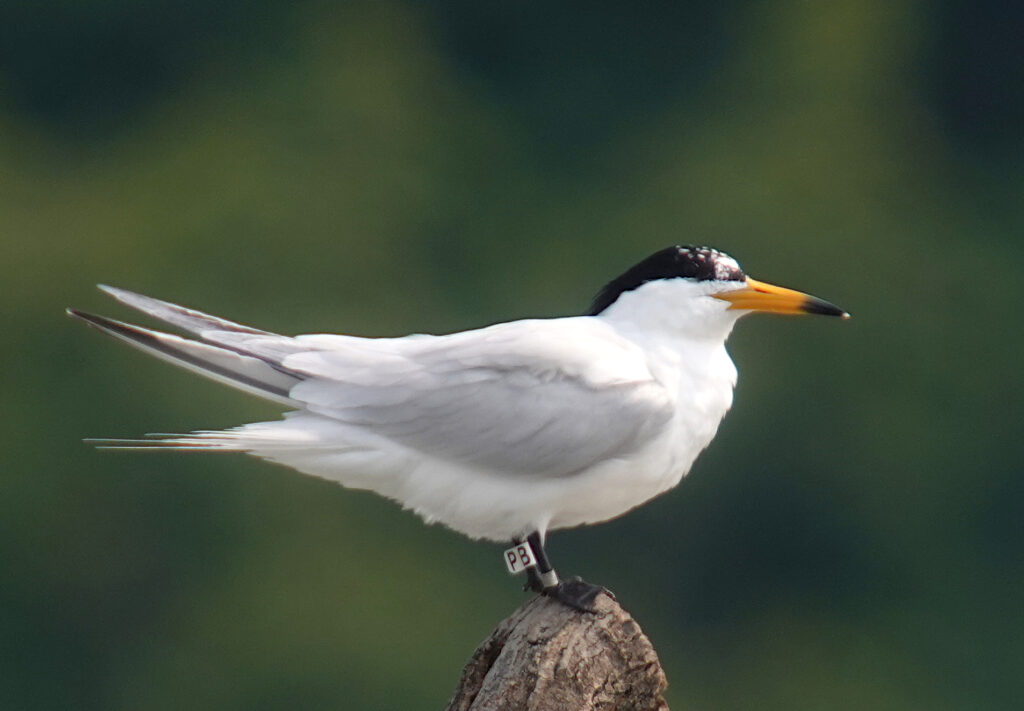
4. In June, conducting five days of basic research on the Critically Endangered Chinese Crested Tern along the mainland coast, as part of time spent with seabird experts, including Peter Harrison;
5. In the summer, providing advice through a private company to a local government on ways to reduce the unintended negative impacts of proposed site management on birds within a designated Flyway Network Site;
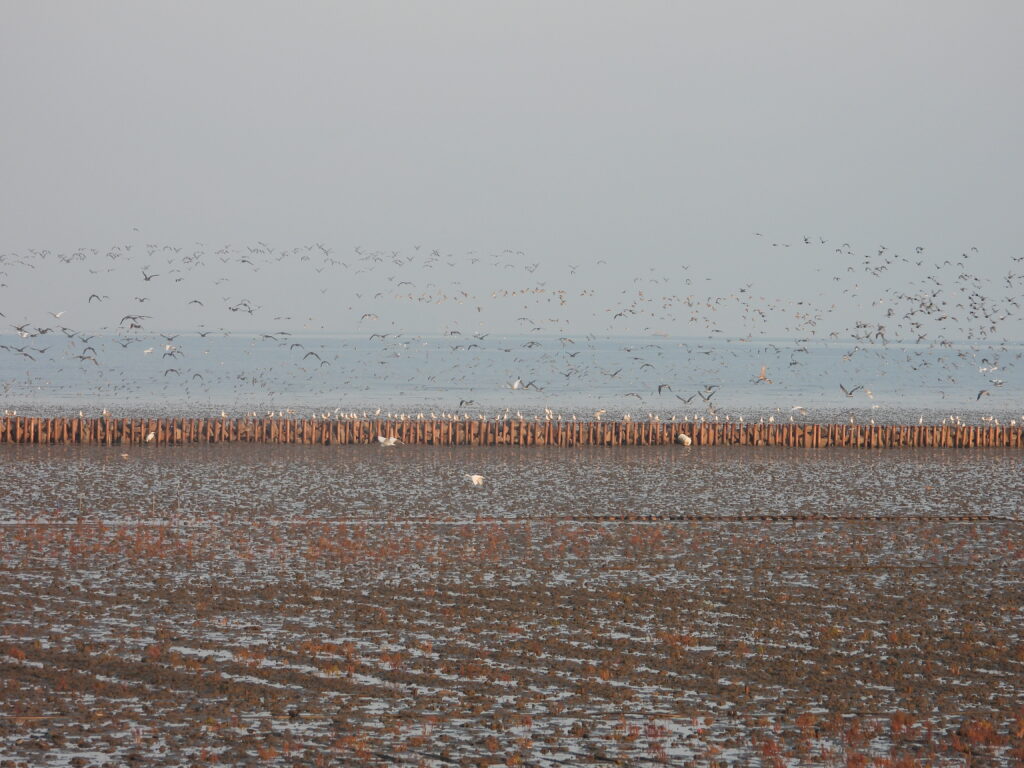
6. In August, several members helping to assess the response of shorebirds and additional threatened waterbird species to the so-called “blue carbon” seawalls built across the tidal flat within what is supposed to be the strictly-protected Hwaseong Maehyangri Tidal Flat Wetland Protected Area in Gyeonggi Province. Our research found that many species of shorebird tried to avoid the seawall, reducing time available to e.g., globally Endangered Far Eastern Curlew for foraging and for roosting on the tidal flat;
7. In October, helping to facilitate a national and regional eBird meeting in Incheon, which resulted in the evolution of a much larger South Korea eBird team headed up by Dr Jungmoon Ha;


8. And throughout the year, taking an active role in calling for much greater research to assess the bird-strike risk at airports, including newly proposed airports inside or within 8km of internationally important wetlands. In addition to submitting an opinion and expert testimony to the court case on Saemangeum New Airport in 2024, we also conducted fixed point counts at the proposed Gadeokdo International Airport in Busan with the results highlighted in an opinion submitted to the court. As posted on our blog,“90 hours of visible migration counts over 16 dates in Daehang, Gadeokdo, Busan, this September (2025) resulted in 12,837 -17,117 individual birds counted, with the five most numerous species Chinese Sparrowhawk Tachyspiza soloensis 붉은배새매 (7,604-11,046); Pacific (Fork-tailed) Swift Apus pacificus 칼새 (1,648-1,907); White-throated Needletail Hirundapus caudacutus 바늘꼬리칼새 (757-957); “Large White-headed Gulls” (1,330); and Black-tailed Gull Larus crassirostris 괭이갈매기 (650-700).” The scale of bird migration through this proposed airport site, at closest within 6km or so of the strictly protected Nakdong Estuary, was captured beautifully by Korean Birder새덕후, Korea’s leading wildlife YouTuber.

In 2026, we:
- Hope to continue our work in the inner border area of Korea, including in Yeoncheon County and on Baengnyeong Island;
2. Will continue our participation in the South Korea eBird Team and EAAFP Scaly-sided Merganser Task Force;
3. Will make further progress with the collaborative pilot restoration project in Busan, and if support is found, help to start to frame a 10-year vision document for biodiversity conservation along the Nakdong River and within the Nakdong Estuary for consideration by other groups and decision-makers;
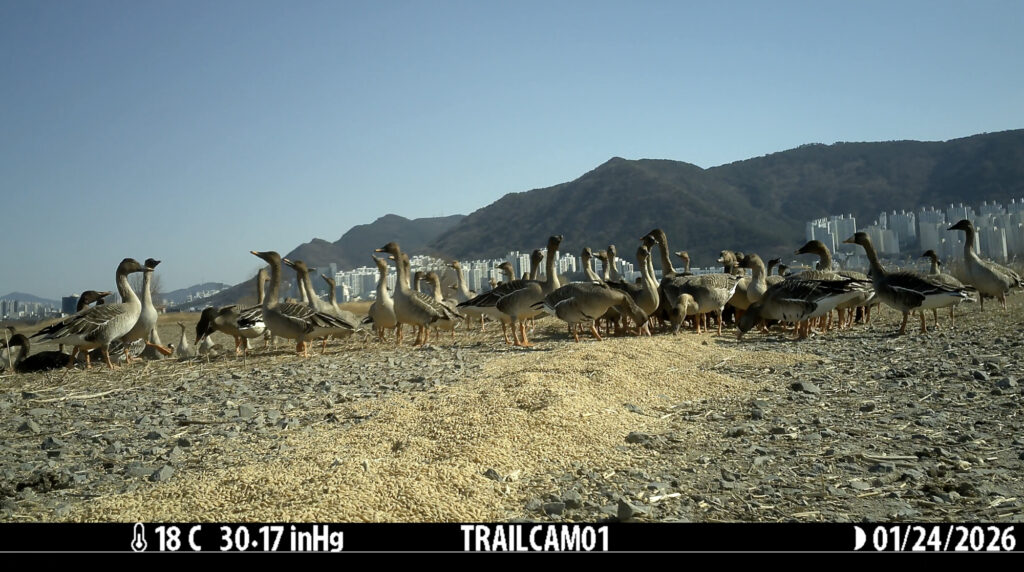
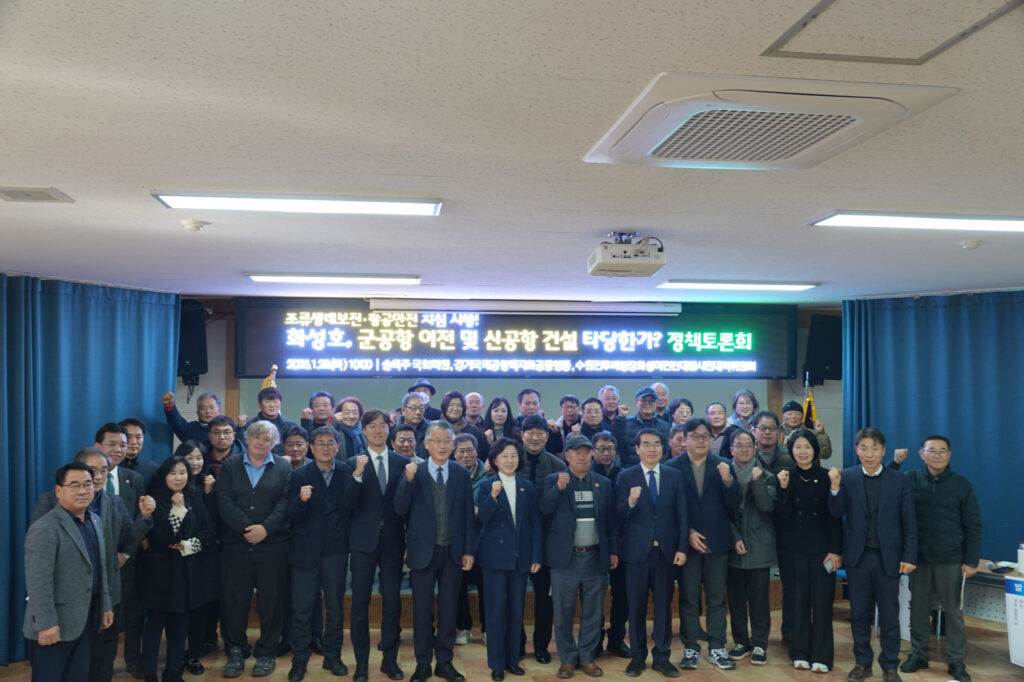
4. Will continue calling for appropriate bird research to assess the bird strike risk as called for by guidance developed by the International Civilian Aviation Organisation, including at the proposed international airport on Gadeokdo and in the Hwaseong Wetlands Flyway Network Site, and on Incheon’s Baengnyeong Island;
5. Will continue with the development of a new online space which can help us to improve communication with and between our members, while organizing information in ways that can better support our shared conservation mission.
- If you support the aims of our work, please join us. Membership starts at only 10,000 Korean Won per month. If you have knowledge and experience relevant to our mission, and / or real passion for conservation and time to give, please contact us to become a volunteer.